Akai Professional MPC Key 37 Standalone Production Synthesizer, Rhythm Box, MIDI Keyboard, with Wi-Fi, Bluetooth, Touch Screen, Plug-ins and Native Integration Instruments
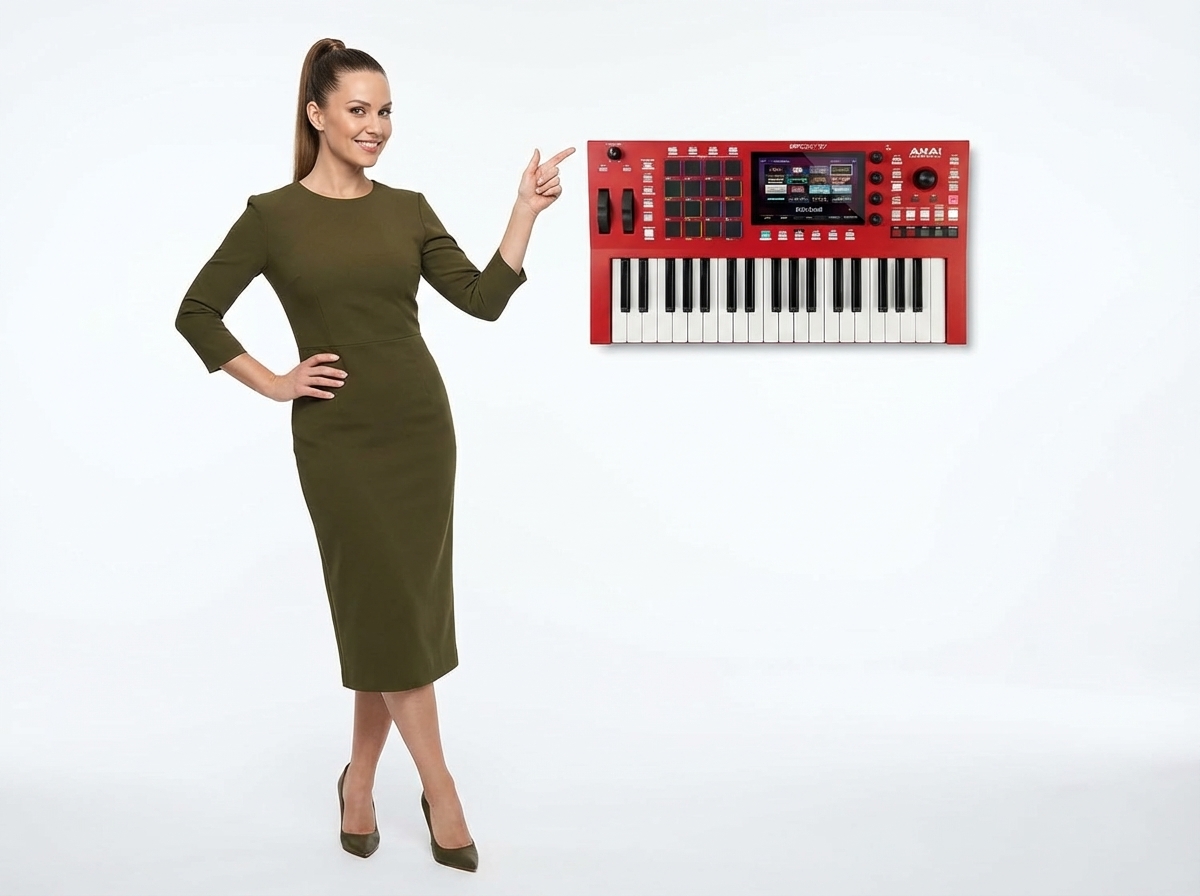
This all-in-one production unit aims to be the centerpiece of a modern studio, blending a 37-key synthesizer with the iconic MPC sampling and sequencing workflow into a single, standalone device. It's designed for creators looking to escape the computer screen and interact directly with their music. This review dives deep into verified specifications and real-world user feedback to help you determine if the MPC Key 37's specific set of features and compromises fits your creative process.
Key Takeaways
- Best For: Keyboard players and studio producers who want the integrated MPC workflow in a compact, desk-friendly format and do not require portability.
- Pros: Truly standalone production capabilities, extensive connectivity including CV/Gate outputs and MIDI I/O, a vibrant 7-inch touch display, and a velocity-sensitive keybed.
- Cons: Lacks an internal battery, limiting its use to the studio. The drum pads are significantly smaller than other MPC models. Limited to 2GB of RAM, which can be a constraint for complex projects. Workflow can feel cumbersome for users accustomed to DAWs.
- Bottom Line: The MPC Key 37 is a powerful but highly specific instrument. It excels as a compact studio hub for keyboard-centric producers but falls short for those who prioritize portability or the traditional finger-drumming experience. Its limitations are significant enough that it's not a universal recommendation.
Product Overview
The Akai MPC Key 37 is a self-contained music production synthesizer. It operates without a computer, running the MPC 2 software internally. Its hardware is built around a synthesizer-style keyboard, backlit drum pads, and a central touch screen for navigation and editing.
Verified Specifications:
- Keys: 37 synth-action keys with velocity sensitivity
- Drum Pads: 16 backlit, velocity-sensitive MPC pads
- Display: 7-inch multi-touch color display
- Internal Storage: 32GB (over 22GB available for user storage)
- RAM: 2GB
- Connectivity:
- Audio Inputs: (2) 1/4” TRS inputs (1 stereo pair)
- Audio Outputs: (2) 1/4” TRS outputs (1 stereo pair), (1) 1/4” stereo headphone output
- CV/Gate: (4) 3.5mm TRS CV/Gate outputs (8 total outputs)
- MIDI: 5-pin MIDI In, 5-pin MIDI Out
- USB: (1) USB Type-A port, (1) USB Type-B port
- Pedals: (3) 1/4" inputs for Sustain, Expression, and Footswitch
- Wireless: Wi-Fi and Bluetooth connectivity
- Dimensions: 58.2W x 31.3D x 10.4H cm
- Weight: 4 kg
Features & Performance
Design and Build Quality
The MPC Key 37 makes a strong visual statement with its vibrant red chassis. User feedback suggests the unit feels solid and well-constructed, with one Reddit user describing it as a "BEAST of a machine." Weighing in at 4 kg, it has a substantial feel appropriate for a studio centerpiece rather than a portable device. The layout places the keyboard front and center, with the iconic 4x4 pad grid and touch screen positioned above, creating an all-in-one control surface.
Pads and Keys
A primary point of contention among users is the size of the drum pads. While responsive and velocity-sensitive, they are noticeably smaller than those found on models like the MPC Live II or MPC X. This design choice prioritizes the keyboard, but as one user on Reddit noted, the pads "don't feel made for adult hands," which can be a dealbreaker for experienced finger drummers.
The 37-key synth-action keyboard is the main attraction and offers a solid playing experience for crafting melodies, chords, and basslines directly within the MPC environment.
Display and Internal Performance
The 7-inch multi-touch screen is the core of the user interface, providing access to the deep functionality of the MPC software. It's bright, responsive, and essential for sample editing, arranging, and mixing.
However, a significant limitation surfaced in community discussions: the device contains only 2GB of RAM. This was a point of confusion and disappointment for users who expected it to have the 4GB found in its larger sibling, the MPC Key 61. This RAM ceiling can become a factor when working with large sample libraries, complex plugin chains, or the platform's new stem separation features.
Software and Features
The MPC Key 37 runs the full standalone MPC operating system, offering a robust suite of production tools. It includes a collection of AIR Music Technology plugins, providing a decent starting palette of sounds. However, some users feel the included selection is limited and that expanding the library with additional paid plugins is almost a necessity.
Splice integration is a key feature, allowing wireless access to an enormous sound library. Yet, its implementation has drawn criticism. Users report the system requires syncing your entire Splice library rather than allowing on-demand browsing and downloading of individual sounds, which feels bulky and inefficient.
Pros & Cons
Based on aggregated user feedback and official specifications:
Pros:
- All-in-One Standalone Workflow: Create full tracks from start to finish without needing a computer.
- Excellent Connectivity: A standout feature, with MIDI I/O, extensive audio inputs/outputs, and four CV/Gate outputs for modular synth integration.
- Keyboard-Centric Design: Appeals directly to musicians who compose with keys rather than pads.
- Vibrant Touch Interface: The 7-inch screen provides clear, hands-on control over the production process.
Cons:
- No Internal Battery: This is arguably the biggest drawback, completely removing any sense of portability and tethering the device to a power outlet.
- Small Drum Pads: A major ergonomic issue for producers accustomed to the classic, larger MPC pads.
- Only 2GB of RAM: A surprising limitation that puts it behind the larger Key 61 and can restrict more ambitious projects.
- Counterintuitive Workflow for Some: Users coming from DAWs like Ableton may find certain tasks require more steps and feel less efficient.
- Clunky Splice Integration: The requirement to sync the entire library is an inconvenient workflow choice.
Real-World Experience & Aggregated User Insights
Digging through community discussions on platforms like Reddit reveals a clear pattern of unmet expectations for a specific type of user. One detailed post on the r/akaiMPC subreddit from a former MPC 2000XL user encapsulates the core issues. They purchased the Key 37 hoping for a portable, focused music-making experience but found it was the opposite. The lack of a battery made it no more portable than a laptop, and the workflow felt more complicated than their computer-based setup.
Across multiple threads, the 2GB RAM specification is a recurring source of disappointment. Users feel that for a device released recently, and as a smaller version of the 4GB Key 61, it should have matched the higher spec to better handle modern production demands. This single specification seems to be a major factor in buyers' decisions.
While detailed transcripts from YouTube reviewers were not available for this analysis, the product has been reviewed by prominent channels like Tefty Music Tech and Yaahn Hunter Jr., indicating it has a significant presence in the music technology space. The general sentiment echoed in community forums suggests that while the machine is powerful, its identity is confused—it's a compact device that isn't truly portable.
Pricing & Value
The Akai MPC Key 37 sits at a premium price point for a piece of standalone hardware. Its value is highly subjective and depends entirely on a user's specific needs. For a keyboardist who wants a self-contained studio brain with deep sequencing and sampling, it might offer excellent value. For a producer seeking portability or a premier finger-drumming experience, its value diminishes significantly.
Potential buyers should also factor in the potential extra costs for sound expansions and plugins, which some users feel are necessary to build a complete sound library.
See today's low price on Amazon 👉
Who Should Buy It / Who Should Avoid It
Who Should Buy It:
- Keyboard Players: Musicians who primarily compose and play using keys will feel right at home with this layout.
- Studio Producers with Limited Space: Its compact form factor makes it an ideal centerpiece for a smaller desk or studio setup.
- Modular Synth Users: The four CV/Gate outputs make it a powerful sequencer and controller for modular gear.
Who Should Avoid It:
- Mobile Producers: The complete lack of an internal battery makes it a poor choice for anyone wanting to make music on the go. The MPC Live II is a far better option.
- Dedicated Finger Drummers: The small, cramped pads are a significant step down from the classic MPC experience. Look to the MPC Live II or MPC X for full-sized pads.
- Power Users with Complex Projects: The 2GB RAM limit may prove to be a frustrating bottleneck for those who use many plugins, long audio tracks, or intensive features.
Final Verdict
The Akai MPC Key 37 is a capable and feature-rich production station that unfortunately suffers from a few critical design compromises. It successfully merges a keyboard and the MPC ecosystem, creating a powerful tool for a specific musician: the studio-bound, keyboard-first producer. However, its identity crisis—being compact but not portable, and having smaller pads—narrows its audience considerably. The decision to include only 2GB of RAM feels like a misstep that holds it back from its full potential. It is a beast of a machine, but one that demands you adapt to its particular workflow and limitations, rather than adapting to yours.
FAQs
Does the Akai MPC Key 37 have a battery? No, it does not have an internal battery and must be connected to a power outlet via its power adapter to operate.
How much RAM does the MPC Key 37 have? Based on user community confirmations, the MPC Key 37 has 2GB of RAM, not the 4GB found in the larger MPC Key 61.
Are the drum pads on the MPC Key 37 full-sized? No, the pads are smaller than those found on other MPC models like the MPC Live II and MPC X, a common complaint among users who are focused on finger drumming.
Can I use third-party VST plugins like Roland Cloud on the MPC Key 37? No. In standalone mode, the MPC Key 37 can only run its native MPC plugins and instruments developed by Akai and its partners like AIR Music Technology. You cannot install standard VST/AU plugins directly onto the hardware.
Related Trends
View All Trends
Review: CRUA 49" Curved Gaming Monitor Ultra-Wide 32:10 DFHD 3840x1080, 165Hz/144Hz, 1500R, AMD FreeSync, 120% sRGB, HDR10, Height Adjustable, HDMI 2.0 * 2 & DP *2, Wall Mountable - Black
Review: NINJA Foodi FlexDrawer Air Fryer, Dual Zone with Removable Divider, Large 10.4L Drawer, 7-in-1, Double Zone, Oil Free, Dishwasher Safe Nonstick Parts, Black AF500EU

Philips Air Fryer Series 5000 Double Basket with Steaming - 9L, RapidAir Plus, 19 Cooking Modes, 90% Less Fat, AirSteam, Steam Cleaning, Accessories (NA550/00)

Review: Kärcher K 3 Power Control High Pressure Washer, Pressure: Max. 120 Bar, Flow Rate: 380 l/h, Surface: 25 m²/h, Water Filter, Weight: 4.4 kg, Gun and High Pressure Hose, Rotabuse, Lance

Ninja BN801 Professional Plus Kitchen System, 1400 WP, 5 Functions for Smoothies, Chopping, Dough & More with Auto IQ, 72-oz.* Blender Pitcher, 64-oz. Processor Bowl, (2) 24-oz. To-Go Cups, Grey